How to prepare for your first online English teaching job
Preparing for a first online English teaching job is a sequence of small decisions. Start by reading the public role information, then prepare honest examples of how you communicate and support learning. This guide covers application materials, interview preparation, a possible teaching demo, and habits that help after a first class. Use it as a planning tool, while the current role page and written instructions remain the source of truth.
Starting your journey as an online English teacher can feel overwhelming. With thousands of ESL platforms hiring teachers worldwide, knowing how to prepare gives you a significant advantage. This comprehensive guide covers everything you need to know before your first class.
Understanding the Online ESL Teaching Landscape
The online English teaching industry has grown exponentially, especially in Asian markets. Companies like XD EnglishThis guide focuses on clear preparation, honest communication, and checking the current published instructions.
Essential Requirements for Online Teaching
1. Educational Qualifications
Review the current public role information and explain your own experience in your own words.Review the current public role information and explain your own experience in your own words. significantly improves your chances. Check our complete requirements guide for detailed qualification information.
2. Technical Setup
Your technical environment directly impacts teaching quality. Essential equipment includes:
Stable internet connection – minimum 10 Mbps upload/download speed
HD webcam – 720p minimum, 1080p recommended
Quality headset with microphone – noise-canceling preferred
Good lighting – ring light or natural front-facing light
Quiet, professional background – clean and distraction-free
For a complete technical checklist, visit our technical guidance page.
Preparing for the Interview Process
Most online ESL companies conduct video interviews that include a teaching demonstration. Here's how to prepare:
Research the company – Understand their teaching methodology and student demographics
Prepare a 10-minute demo lesson – Choose a simple topic like greetings or colors
Practice TPR techniques – Use gestures and visual aids effectively
Test your equipment – Do a complete technical run-through beforehand
This guide focuses on clear preparation, honest communication, and checking the current published instructions.5 tips to make your teaching demo shine.
Building Your Teaching Toolkit
Successful online teachers invest in resources that enhance engagement:
Digital flashcards and props – Physical items students can see on camera
Reward systems – Stars, stickers, or point-based incentives
Whiteboard or annotation tools – For real-time corrections and explanations
Background music and sound effectsThis guide focuses on clear preparation, honest communication, and checking the current published instructions.
What to Expect in Your First Month
This guide focuses on clear preparation, honest communication, and checking the current published instructions.
Adapt lesson plans based on student responses
Develop classroom management strategies for virtual settings
Build rapport with regular students
Refine your teaching style and energy levels
Remember, every experienced teacher was once a beginner. The key is staying patient, seeking feedback, and continuously improving.
Start Your Teaching Journey Today
This guide focuses on clear preparation, honest communication, and checking the current published instructions.why teachers choose XD English, or apply now to start your journey.
Research the role
Start with a question that keeps the learner or interviewer oriented. What are we doing now, why does it matter, and what will happen next? Clear signposting prevents a short interaction from becoming a collection of disconnected activities. It also helps you notice when the other person needs a slower explanation or a different example.
Before the call, write down the single outcome you want from the conversation. It may be to explain how you would support a learner, describe a useful lesson activity, or ask a question about the next step. A short note keeps preparation focused without turning into a script. Leave enough space to listen. If the interviewer gives new context, acknowledge it and adjust your example rather than forcing an answer that no longer fits.
Prepare honest materials
Keep materials easy to reach, but do not let them become the center of attention. One prompt, one example, and one way to respond are often enough to begin. If you share a screen, check that the text is readable and that you can return to the conversation. The material should support communication, not hide it.
When you review your own work, record observations rather than harsh labels. Note which instruction the learner understood quickly, where a pause helped, and which transition felt rushed. Choose one change for the next attempt. This makes reflection practical and keeps improvement connected to something you can try. It also gives you a useful way to describe your teaching decisions in a later conversation.
Approach the interview
Listening is an active teaching skill. Give the learner time to finish, repeat the important word in a natural sentence, and ask a follow-up question that shows you heard the meaning. Correct only what helps the current goal. A respectful correction explains the next attempt rather than making the learner afraid to speak.
A human reviewer considers the complete context instead of treating a single automated signal as a hiring decision. If the team needs more information, the next instruction will explain what to prepare and how to submit it through an authenticated channel. A written offer is the place where applicable engagement and compensation terms are confirmed. Public guides cannot replace that offer or promise a result.
Think through a demo
A short review after a demo or class can be organized into three questions: what worked, what confused the learner, and what will I change next time? Keep the answers specific. Instead of writing that the class was good or bad, note the exact activity, transition, or explanation. Specific notes make the next plan easier to improve.
Good preparation leaves room for judgment. A plan is a starting point, not a promise that every learner or conversation will follow the same path. If an activity is too difficult, reduce the number of steps. If it is too easy, ask for a reason or an example. If the connection changes, state what happened calmly and use the available communication channel. Clear recovery is part of professional teaching.
Review the open teaching role
Read the role details and application process before you start.
View the roleRelated Posts
Prepare your online teaching video interview environment
A calm, clear setup helps you focus on the teaching conversation. Use this checklist for camera, sound, background, lighting, and a final test run.
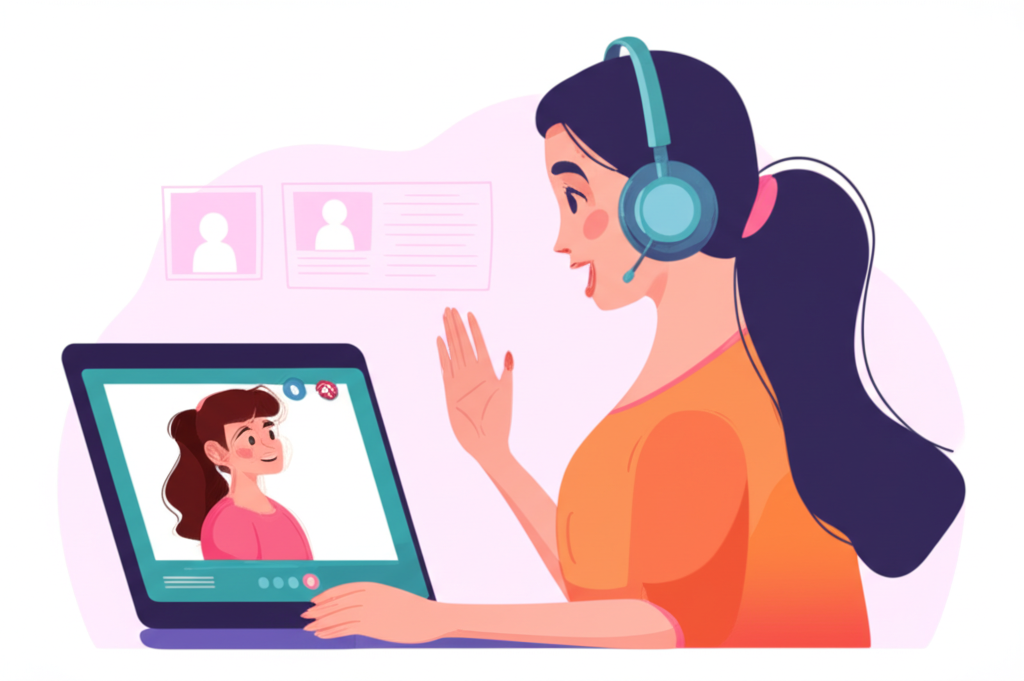
Prepare for your first online English teaching class
Plan a simple lesson flow, make room for learner interaction, and leave time to reflect after your first online class.
5 ways to prepare for an online teaching demo
Show how you explain, listen, adapt, and manage time in a short teaching demo without turning it into a performance that feels scripted.